Sunspots by Binocular Eyepiece Projection
Oct 13, 2023 10:30am EDT
The angular diameter of the sun and moon are both about 0.5° varying slightly
with the distance the sun and moon are away from the earth (due to their elliptical orbits).
For a single lens/mirror system (the "objective" lens) with focal length FL, the diameter Id of the sun or moon image in the focal plane is approximately:
Id = FL x θrad = FL x 1/2(π/180) ~ 0.009FL
where θrad is the angular diameter of the sun/moon image in radians. With a binocular or telescope system, the eyepiece provides magnification
of the image formed by the main lens/mirror. The resultant image for a bright object like the sun can
be projected and the focus adjusted to achieve large images of size suitable for photographing.
The sun should NEVER be viewed directly or using any optical aid such as binoculars or even the
smallest telescope unless equipped with proper solar filters over the main objective lens.
Eyepiece projection discussed here allows for safe viewing.
With eyepiece magnification and projection with a measured image diameter of Id,
the EFFECTIVE focal length (EFL) is:
EFL = Id / 0.009
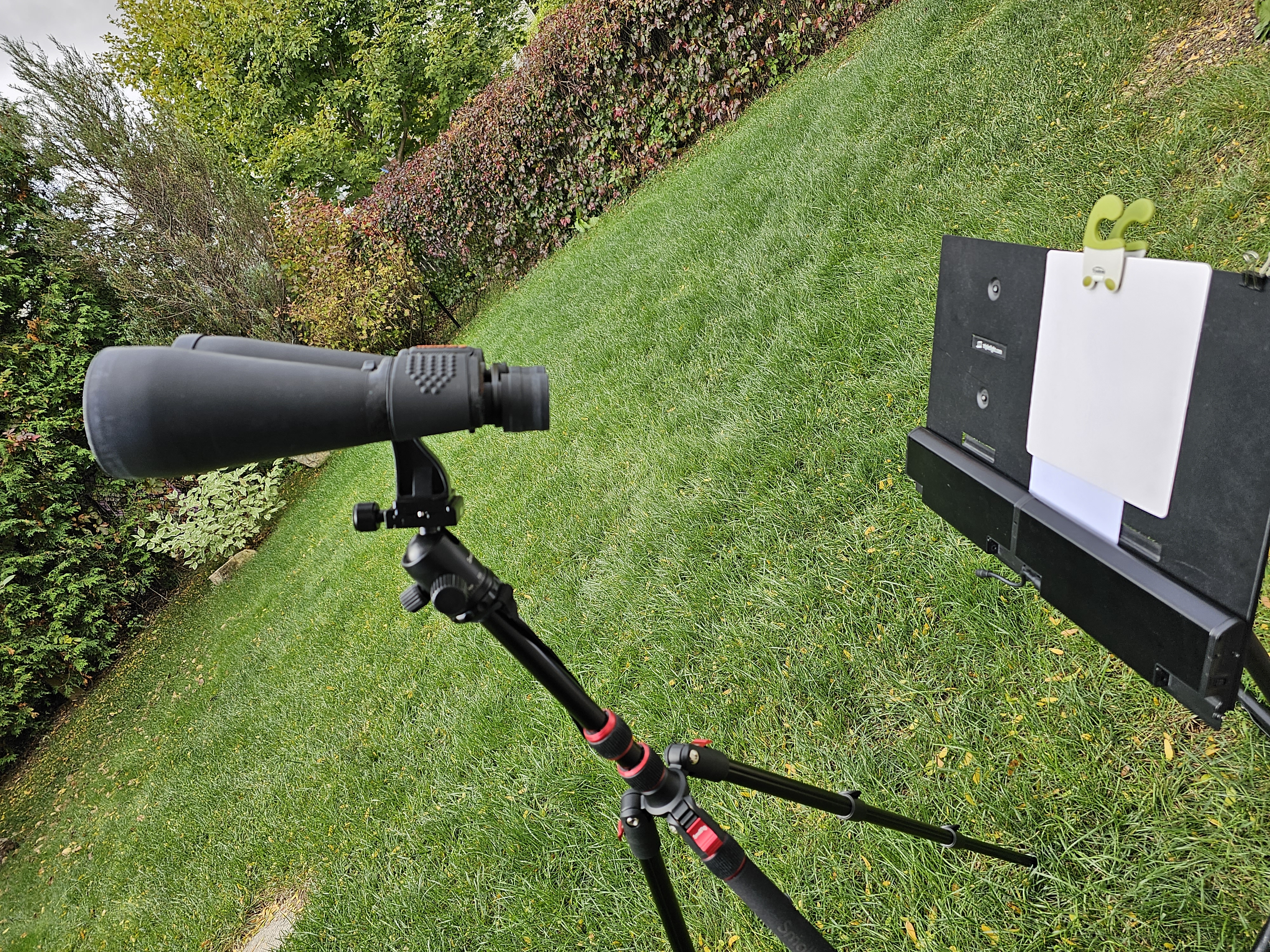

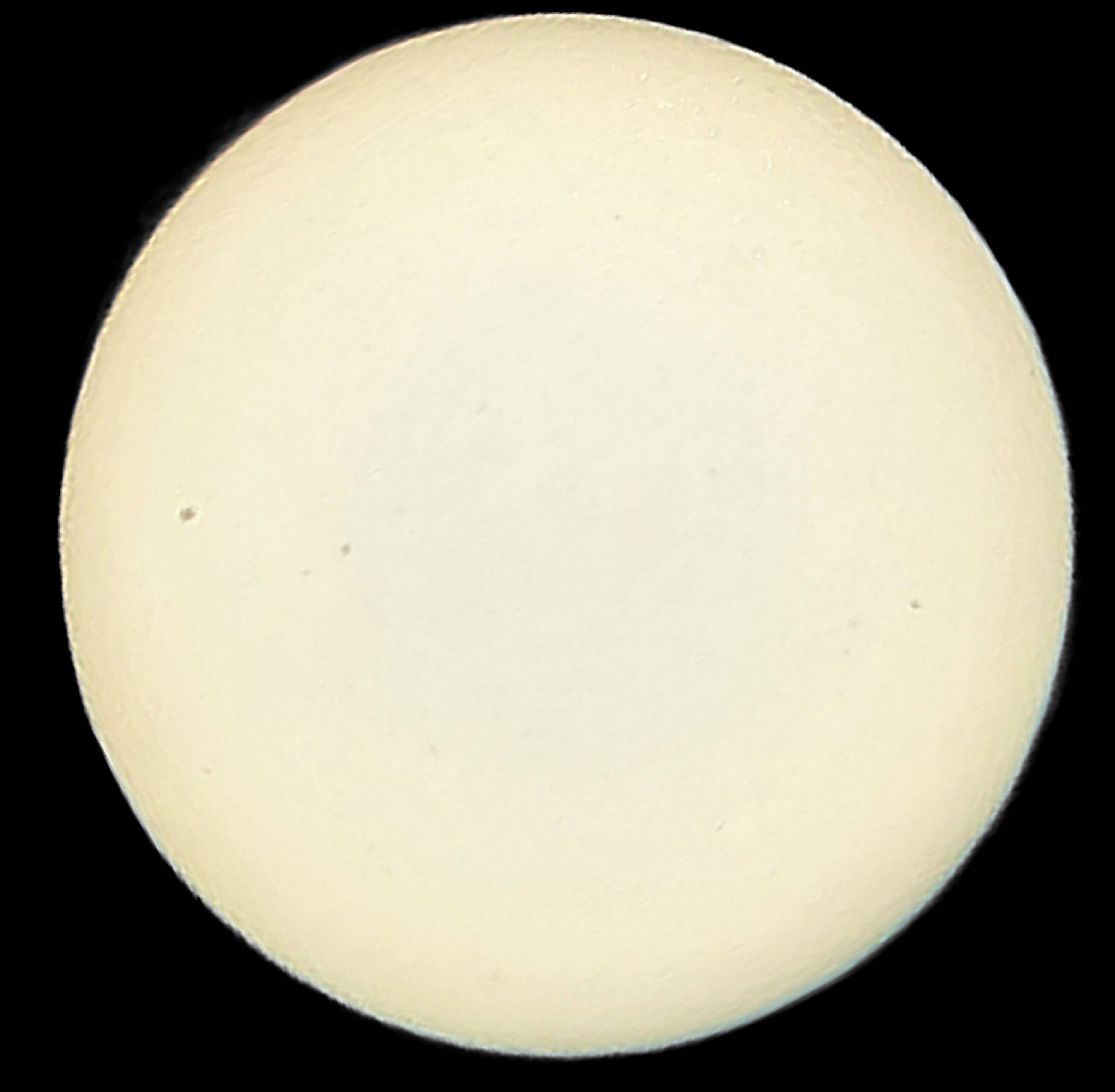
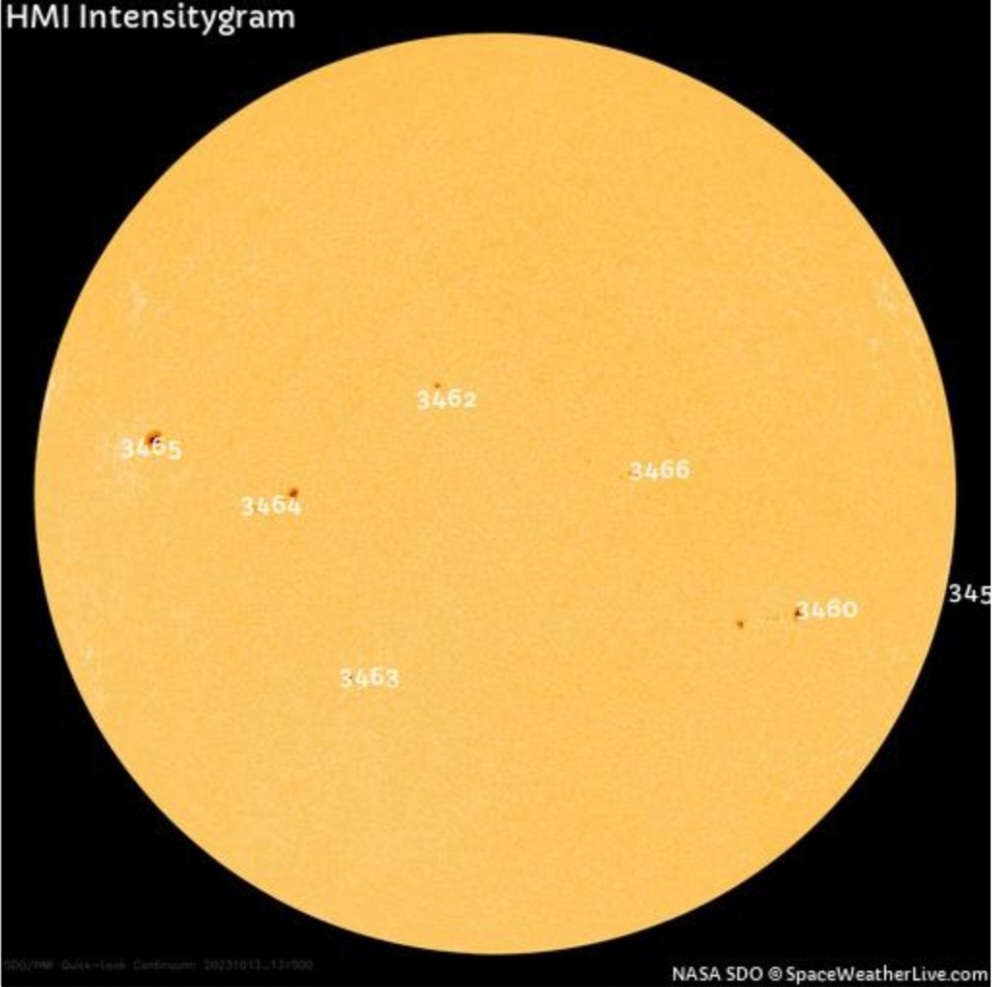
The images below show binocular projection using Celestron 15x70 SkyMaster binoculars with the eyepiece adjusted
to show a sun image diameter of ~ 2", a convenient size to show more prominent sunshots. This size image
corresponds to an EFL ~ 560mm. The photo at bottom right is from the
NASA SDO observatory for the same
time frame (Oct 13, 2023 ~ 10:30 am EDT) showing more details of the sunspots (click for enlarged views).
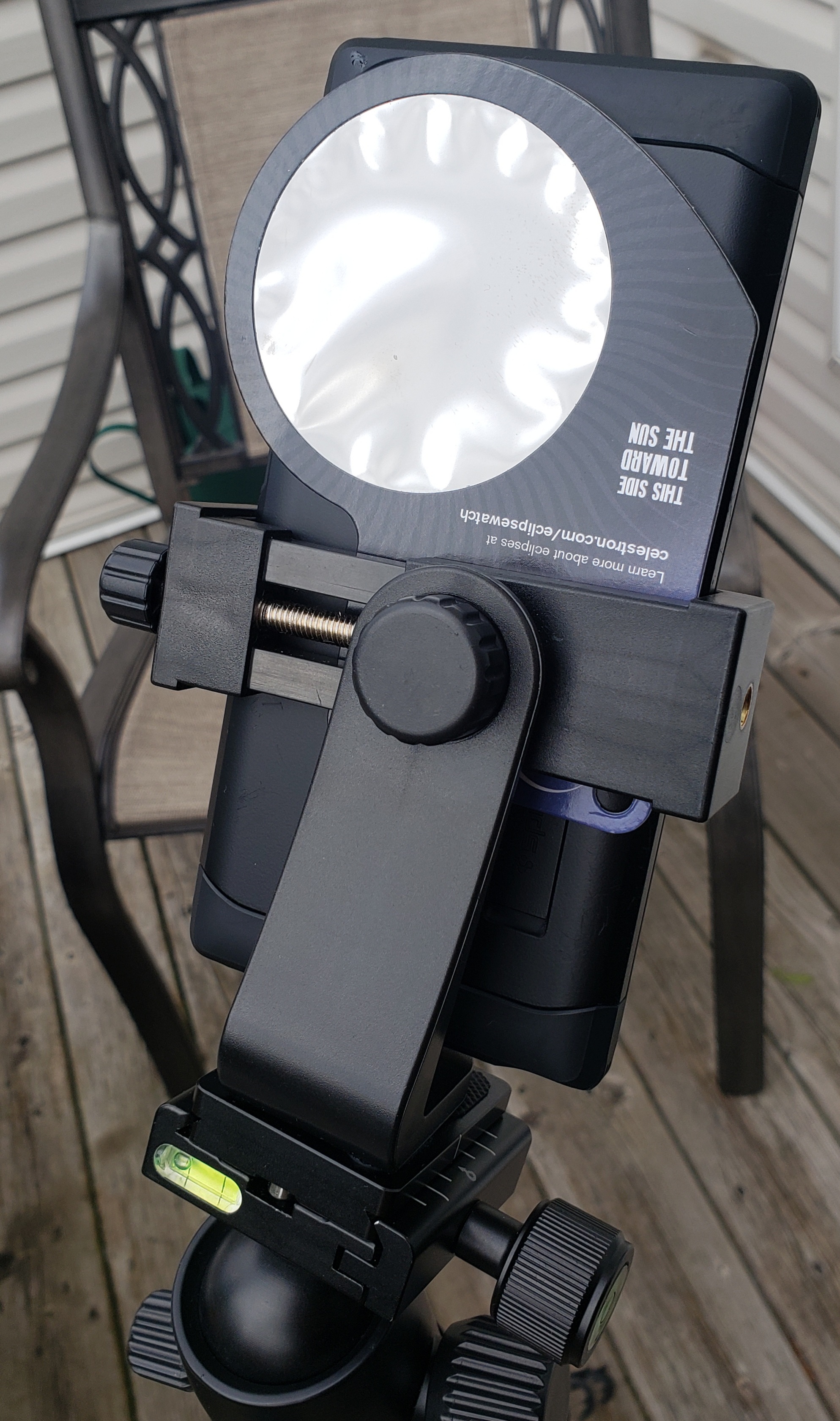
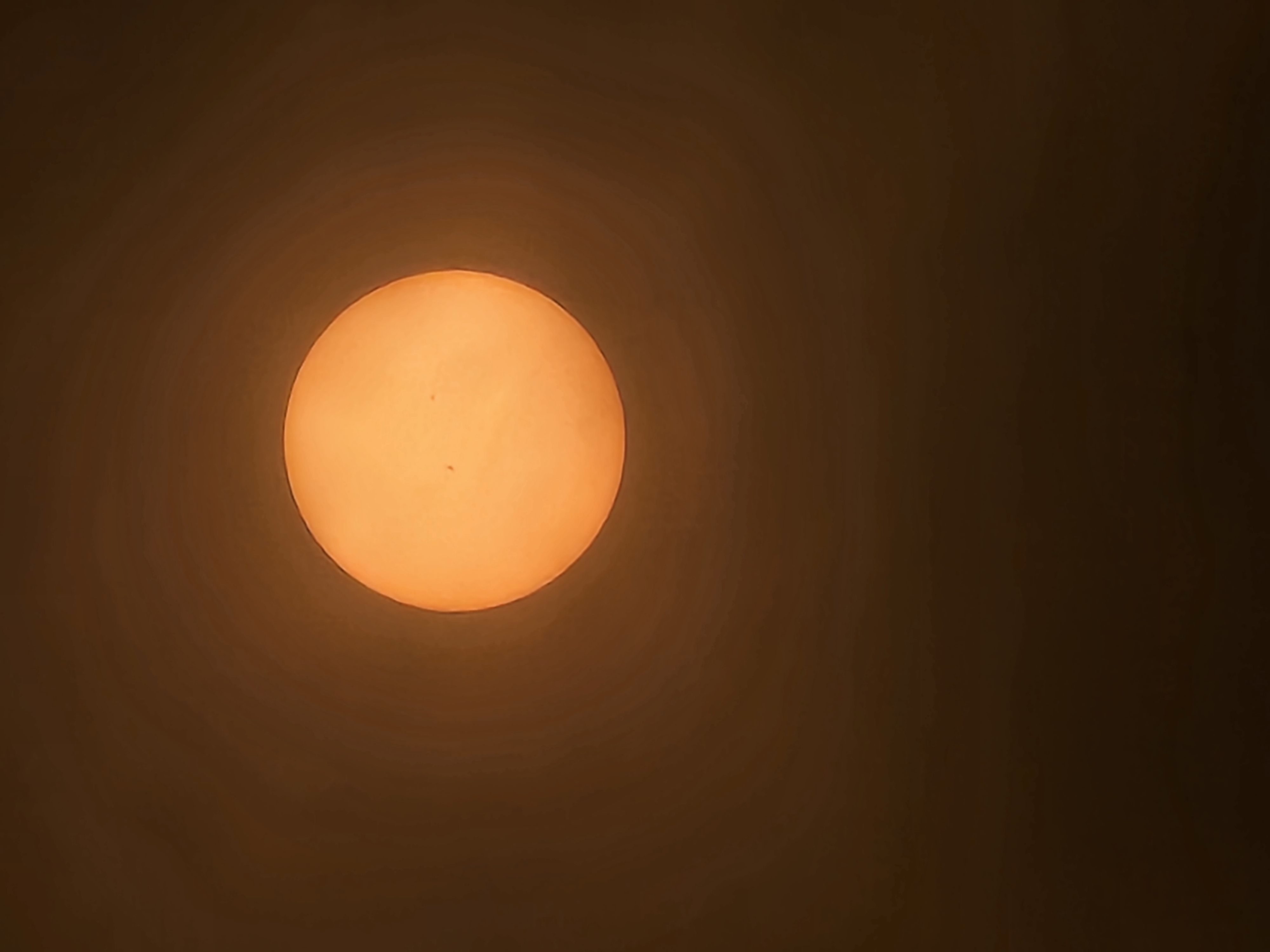
Sunspots with smartphone & solar filter
Oct 16, 2023 12:31 pm EDT
Partial cloud cover. S23 Ultra 10x f/4.9 periscope camera with zoom x42 ISO-400 1/30sec
Celestron ECLIPSMART Solar Safe Photo Filter.